

Semiconductor processes use high-purity acids, alkalis, solvents and specialty chemicals. Particles, residue, permeation or leakage on wetted surfaces can affect the process. Beyond corrosion resistance, semiconductor fluoropolymer processing and equipment must be evaluated across materials, structure, fabrication, cleaning, inspection and traceability.
Key Takeaways
- The core of semiconductor-grade fluoropolymer processing is controlling contamination, permeation and leakage risks under specified operating conditions.
- PFA, PTFE and modified PTFE (M-PTFE) differ in forming methods, welding characteristics and mechanical performance, so material selection must match the equipment structure.
- Storage tanks, ISO tanks, heat exchangers, piping and valves should be evaluated as an integrated system; connection points are often more vulnerable than individual equipment items.
- Material certificates, process records and final inspections serve different purposes. Together, they form a traceable product history.
Table of Contents
1. How Does Semiconductor-Grade Processing Differ from General Industrial Processing?
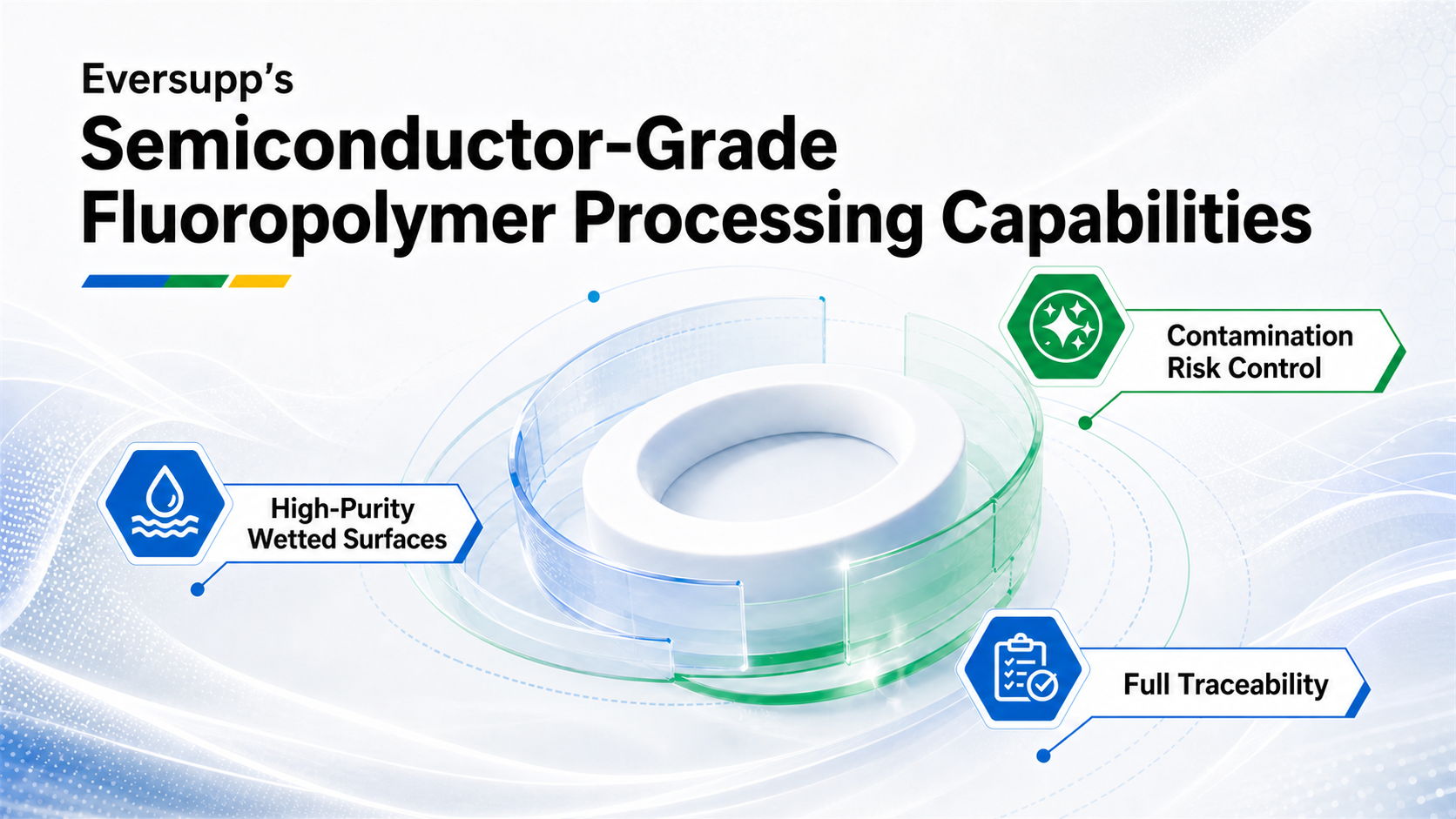
General chemical equipment typically focuses on corrosion resistance, temperature resistance and pressure resistance. Semiconductor high-purity equipment and chemical delivery systems must also control metal ions, particles, organic residue and cross-contamination. Raw-material lots, tools, welds, dead legs, cleaning and packaging can all affect the cleanliness of wetted surfaces.
The evaluation can be divided into four areas:
- Material Compatibility: The same acid or alkali can affect material permeation, swelling and mechanical strength differently depending on concentration, temperature and pressure.
- Wetted-Surface Quality: Lining flatness, weld continuity, corner treatment and fitting joints influence liquid retention, particle shedding and leakage risk.
- Process Contamination Control: The environment and tools used for cutting, forming, fusion welding and assembly should prevent oil, metal chips or incompatible materials from contacting the finished product.
- Records and Acceptance: Material lots, processing parameters, inspection results and corrective actions must be linked to the same product so they can be traced during maintenance or process abnormalities.
Operating conditions and acceptance criteria should be defined before selecting materials and processing methods, preventing weak points from being left at welds, flanges or valve connections.
2. How Do the Applications of PFA, PTFE and M-PTFE Differ?
All three are fluoropolymers, but their forming methods and suitable structures differ. In addition to temperature resistance and cost, material selection should consider part geometry, joints, long-term loads, thermal cycling and maintenance methods.
| Material | Processing and Joining Characteristics | Common Applications | Items to Confirm During Selection |
|---|---|---|---|
| PFA | Thermoplastic processing and fusion welding | Piping, fittings, heat exchangers and complex wetted components | Wall thickness, welding method, permeation and cleanliness requirements |
| PTFE | Commonly used for sheet lining and machining | Tank linings, gaskets and machined parts | Attachment method, cold flow, thermal expansion and support |
| M-PTFE | Improved permeation resistance, surface properties and joining performance | High-purity tanks, linings and sealing areas | Chemical, temperature and pressure, dimensions and actual grade |
Material selection should begin by defining the media and operating conditions, followed by the structure and processing method, and finally the grade and thickness. If equipment combines sheets, piping, gaskets and valves, compatibility at every connection must also be checked.
3. How Should Large Storage Tanks, ISO Tanks, Heat Exchangers, Piping and Valves Be Integrated?
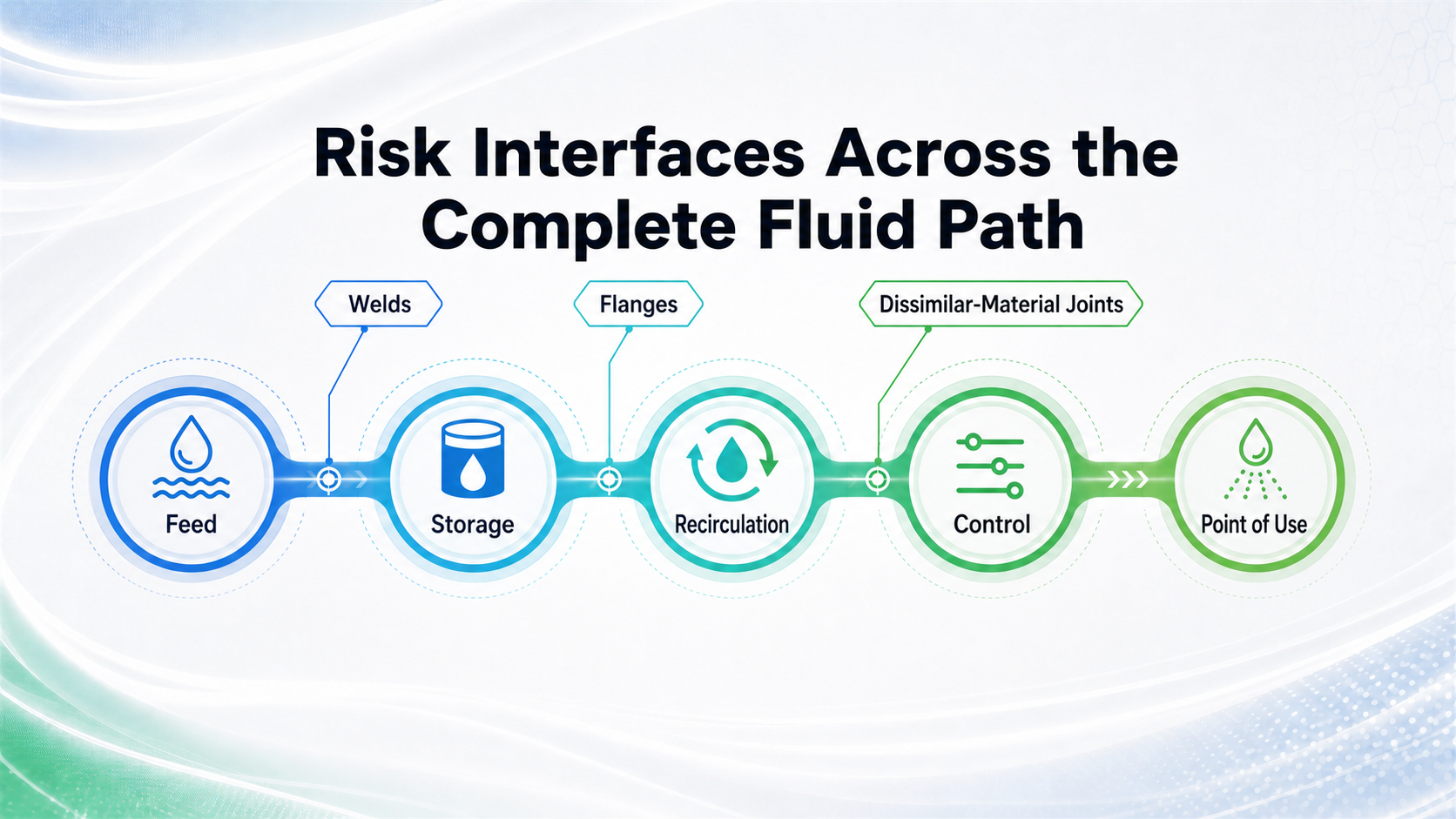
The fluid path in electronic-grade chemical equipment may run from the receiving point through transport tanks, unloading valves, storage tanks, recirculation piping, heat exchangers and supply valves to the point of use. Flanges, welds and dissimilar-material joints are all risk interfaces, so equipment selection should be based on the complete fluid path.
Storage Tanks and Process-Vessel Linings
The design must account for tank dimensions, supports, openings, liquid-level changes and venting. Large linings require particular attention to sheet seams, corners, nozzles and thermal expansion and contraction to prevent localized stress or bulging.
ISO Tanks and Transport Tanks
In addition to wetted materials, the design must consider loading and unloading frequency, transport vibration, valve protection, cleaning and regulatory inspections. A connection arrangement suitable for stationary equipment may not be appropriate for mobile service.
PFA Heat Exchangers
Chemical compatibility, heat-transfer area, flow rate, pressure drop, pressure resistance and temperature differential should all be confirmed. Pursuing heat-transfer efficiency while overlooking tube-bundle support or stresses caused by thermal cycling increases the risk of connection fatigue.
Lined Fittings, Valves and Gaskets
Matching nominal diameters do not guarantee direct compatibility. Sealing faces, flange standards, gasket materials, fastening methods and installation space must also be compared.
For integrated design, first map the media flow and identify wetted materials, connection types, operating pressures and removable sections. Then check for drainage dead legs, maintenance space and sampling points.
4. What Inspections and Traceability Records Are Required for Semiconductor-Grade Fluoropolymer Processing?
Inspections should correspond to failure risks. Tanks and linings emphasize surfaces, welds and pinholes; enclosed piping may require leak or pressure testing; flanges, holes and assemblies require dimensional checks. Where cleanliness is required, cleaning, drying and packaging must also be included.
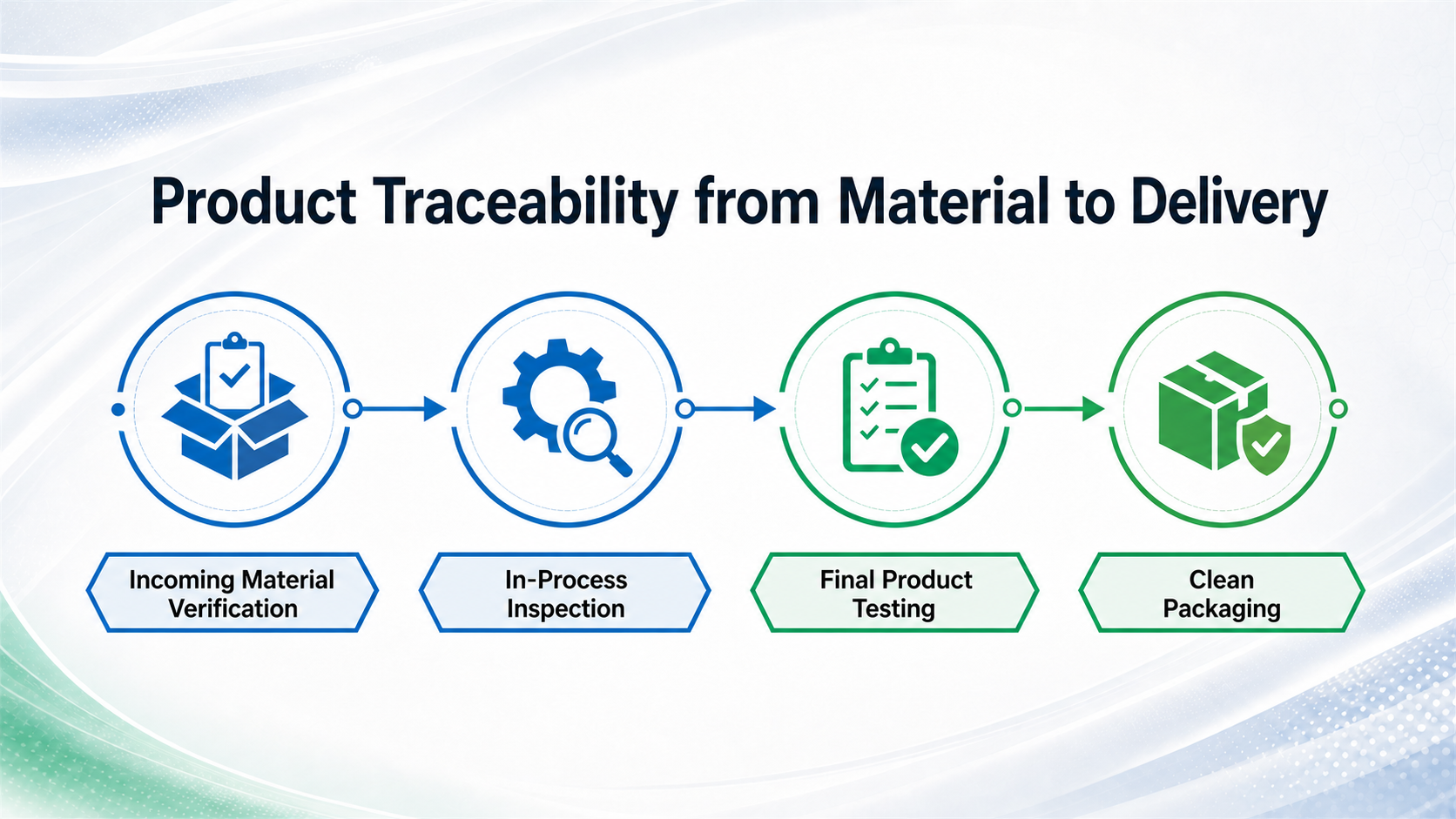
- Incoming Material Verification: Verify material grade, specification, lot number and certificates to prevent different grades or lots from being mixed without identification.
- In-Process Inspection: Record key stages in cutting, forming, fusion welding and assembly, and verify weld appearance, dimensions and connection integrity.
- Final Product Testing: Arrange dimensional, visual, pinhole, leak or pressure inspections according to the equipment structure. Methods and conditions are determined by the design and acceptance specifications.
- Cleaning and Packaging: After inspection, prevent secondary contamination during handling or packaging. Wetted openings should be properly sealed and labeled with product information.
A product history links raw materials, processing and final inspection results into one record. If leakage, discoloration or abnormal particles occur, it becomes easier to determine whether the cause is the material, fabrication, installation or operating conditions. If third-party inspection is required, sampling, witness points and acceptance criteria should be confirmed before fabrication.
5. Eversupp’s Fluoropolymer Processing Capabilities and Services
When evaluating a fluoropolymer processor, buyers should confirm not only material and processing capabilities but also whether upstream and downstream equipment can be integrated. Eversupp’s services extend from individual components to tanks, heat exchangers, transfer piping and PFA acid supply systems. Configurations can be discussed based on the media, temperature and pressure, flow rate, drawings and acceptance requirements.
Eversupp’s services cover five areas:
- Broad Range of PFA Equipment: Includes tank and process-vessel linings, ISO tanks, heat exchangers, filters, fittings, valves and piping.
- Acid Supply System Integration: Services cover system planning, tank configuration, instrumentation and electrical design, and on-site piping installation.
- Product Traceability and Inspection: Links material, processing, quality-control and acceptance records, with third-party inspection coordinated where required by the project.
- Custom Integration: Supports new-plant and expansion projects through discussions of equipment configuration, workflow, tanks, instrumentation and on-site piping.
- Engineering and After-Sales Service: Sales and engineering teams coordinate drawings, fabrication, completion and follow-up requirements.
6. Frequently Asked Questions
-
Q1 Is PFA always better than PTFE for semiconductor equipment?Not necessarily. PFA is suitable for complex fluid paths and continuous fusion welding, while PTFE is commonly used for large-area sheet linings, gaskets and machined parts. The key factors are equipment structure, connection points and operating conditions.
-
Q2 If fluoropolymers are corrosion-resistant, why can leakage still occur?Leakage often occurs at welds, flange seals, bolted joints or areas stressed by thermal cycling, rather than from material corrosion. Start troubleshooting with the connection points and operating conditions.
-
Q3 Can product traceability records replace final product testing?No. Product traceability records document raw materials and processing, while final testing verifies dimensions, surfaces, connections and sealing condition at delivery. Omitting either one leaves a gap in the traceability chain.
-
Q4 Is a thicker lining always safer for large tanks?Thickness affects rigidity, forming, welding and thermal expansion and contraction. It must still be designed for the tank structure, dimensions, temperature and pressure, and attachment method. Increasing thickness alone cannot eliminate seam or corner risks.
-
Q5 What minimum information is required before custom fabrication?At minimum, provide the media and concentration, normal and maximum temperatures, operating and design pressures, capacity or flow rate, dimensional drawings, nozzle and valve specifications, installation environment, cleaning method and acceptance requirements. Incomplete information can prevent proper confirmation of the material and processing method before fabrication.